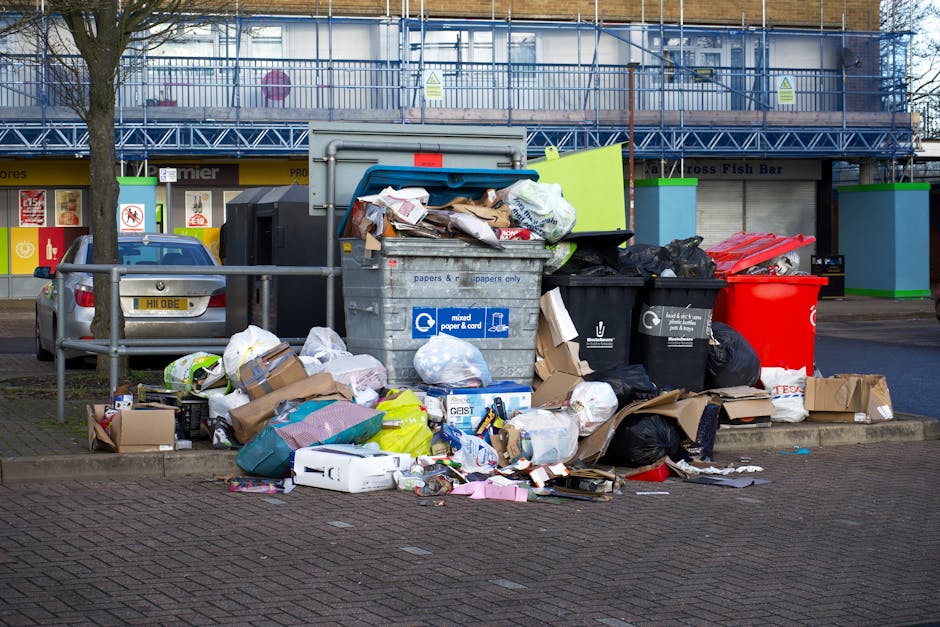
Avoid hidden fees for rubbish clearance in Finsbury Park
Posted on 06/08/2026
Avoid hidden fees for rubbish clearance in Finsbury Park: a clear guide to fair pricing
If you have ever booked rubbish clearance and then watched the final bill creep up, you will know how annoying it feels. In a busy place like Finsbury Park, where flats, terraces, shops and small businesses all generate different kinds of waste, it pays to be careful. This guide to avoid hidden fees for rubbish clearance in Finsbury Park is here to help you spot dodgy pricing, ask the right questions, and choose a service that tells you the full cost up front. No fluff, no surprises, just the practical stuff that saves money and stress.
Truth be told, most price shocks happen before the van even arrives. A vague quote, unclear access details, or extra charges buried in the fine print can turn a simple job into an expensive one. The good news? Once you know what to look for, it becomes much easier to compare quotes properly and stay in control.

Why Avoid hidden fees for rubbish clearance in Finsbury Park Matters
Hidden fees are not just a nuisance. They can completely change whether a clearance feels like good value or a bad deal. A quote that looks cheap at first glance may exclude loading time, difficult access, congestion, disposal of certain items, or even waiting time. By the time those extras appear, the job can cost far more than expected.
That matters even more in Finsbury Park, where many properties have stair-only access, narrow hallways, limited parking, or shared entrances. A company that quotes loosely for a first-floor flat in a busy street may later say the stairs, distance to the van, or awkward access were "unexpected". Were they really unexpected? Often, no. They were just not discussed properly.
There is also a trust issue. Clear pricing usually reflects a clear service culture. If a provider is upfront about what is included, how they calculate waste volumes, and what triggers extra charges, that is generally a good sign they run a more organised operation. You can check broader service expectations through their pricing and quotes information and their terms and conditions, which should spell out the basics in plain language.
In practical terms, avoiding hidden fees means you can compare like with like. That is the real game. Without that, one quote may look cheaper only because it is missing half the job.
How Avoid hidden fees for rubbish clearance in Finsbury Park Works
The idea is simple: make sure the quote covers the real job, not just a teaser price. A trustworthy rubbish clearance provider should assess the waste, understand access, and explain exactly what is included before anyone starts loading.
In a typical booking, the process may look like this:
- You describe the waste, including rough volume and type.
- The company asks follow-up questions about access, parking, stairs, and any heavy items.
- You receive a quote that should clearly show what is included.
- On arrival, the team confirms the load and starts the clearance.
- If anything materially changes, it should be discussed before extra charges are applied.
That last point is the one people often miss. A decent provider will not silently alter the price after half the pile is already on the truck. They should tell you if the actual load differs from the description, and they should explain why the price changes. Simple, really. Not always simple in practice, but it should be.
It is also worth distinguishing between a fixed quote and an estimated quote. A fixed quote is easier for budgeting if the job description is accurate. An estimate can still be fine, but only if you understand the assumptions behind it. If you want to see how transparent service pages are structured, the site's services overview is useful for understanding the kinds of jobs a clearance team may handle.
For some jobs, such as bulky furniture or appliances, there may be special handling considerations. The key is that any uplift should be explained before collection. If you are booking a sofa removal, for example, ask whether dismantling, carrying through tight communal areas, or removing from an upper floor changes the fee. Do not assume.
Key Benefits and Practical Advantages
When pricing is transparent, the whole experience tends to feel calmer. You know where you stand, and that matters when you are already dealing with clutter, renovation mess, a house move, or a garden clear-out.
- Better budgeting: You can plan the real cost before booking.
- Less stress on the day: No awkward surprise conversation at the kerb.
- Faster decisions: Clear quotes make comparison easier.
- More trust: Transparent pricing usually goes hand in hand with better service.
- Fewer disputes: Everyone understands what has been agreed.
There is another subtle benefit too: it helps you decide whether you even need a full clearance or just a smaller, more focused collection. If a quote feels inflated, you may realise the actual issue is one bulky item, not a whole load. That could change how you book and save you money.
For example, a renter in a flat off Seven Sisters Road might think they need a full van for a few broken items, when in reality a lighter domestic collection would do the job more efficiently. That kind of judgement call is where clear pricing really helps.
If sustainability matters to you, transparent pricing can also help you understand how reusable and recyclable items are handled. A company that explains its disposal routes, recycling approach, and responsible sorting is usually easier to trust. You can read more on the site's recycling and sustainability approach if that is a priority for your household or business.
Who This Is For and When It Makes Sense
This guidance is useful for almost anyone arranging waste removal, but it is especially relevant if you are trying to keep a tight grip on costs. If any of the situations below sound familiar, you will probably benefit from being extra careful.
- Homeowners clearing out a spare room, loft, shed, or garden
- Tenants moving out and trying to avoid end-of-tenancy costs
- Landlords needing fast, tidy clearances between lets
- Tradespeople dealing with builders waste after a small project
- Shops, offices, or local businesses disposing of old stock or fixtures
- Anyone dealing with bulky items that are awkward to carry
It also makes sense if you are comparing several providers and one quote looks suspiciously low. To be fair, a bargain price can be real. But sometimes it is just a bait figure with add-ons waiting in the wings. That is the moment to slow down and ask for detail.
Different waste types can trigger different handling needs. A house clearance may involve mixed items and more sorting. Builders waste often includes heavier debris. Garden waste may seem simple, yet green material can be priced differently from mixed rubbish. A fridge or washing machine may involve appliance disposal rules. So yes, the type of rubbish matters a lot.
For category-specific jobs, the relevant service pages can help you understand what is typically involved, such as domestic waste collection in Finsbury Park, builders waste removal, garden waste removal, furniture removal, house clearance, and white goods and appliance disposal.
Step-by-Step Guidance
If you want a straightforward way to avoid surprise charges, follow this process. It is not glamorous, but it works.
- List everything you want removed. Separate bulky items, bags, green waste, appliances, and anything potentially hazardous.
- Take a few photos. Wide shots help, especially if the load is awkward or spread across multiple rooms.
- Describe access honestly. Mention stairs, narrow hallways, basement storage, parking restrictions, and lift availability.
- Ask what is included. Loading, labour, mileage, disposal, VAT, congestion considerations, and any lifting help should be clear.
- Ask what could trigger extra charges. This is the big one. Get examples, not vague reassurance.
- Request confirmation in writing. Email, booking note, or quote document is better than a verbal promise you will forget later.
- Confirm timing and waiting policy. If you need a narrow collection window, ask whether there is a fee for delays.
- Check payment method and terms. Make sure you know when payment is due and what happens if the scope changes.
Small detail, but important: if you are in a flat and the waste is split between a hallway, balcony, and storage cupboard, say so. That can affect loading time more than people expect. A photo of the "easy part" only tells half the story.
If you are planning a same-day or urgent booking, the same rules apply, only faster. The site's same-day rubbish clearance guide is a useful reminder that speed should never replace clarity. Fast is fine. Hidden extras are not.
Expert Tips for Better Results
After enough clearances, a pattern becomes obvious: the people who ask a few extra questions tend to get the smoothest outcome. Here are the habits that make the biggest difference.
- Be precise about volume. "A few bags" and "half a van" are not the same thing.
- Tell the truth about access. A flight of stairs, a long walk from the road, or a tight loading bay can change the job.
- Separate special items. Mattresses, appliances, plasterboard, paint, and mixed builders waste may be handled differently.
- Ask for a clear list of exclusions. If something is not included, you need to know before collection day.
- Keep a copy of the quote. Screenshots and email records are your friend. Not exciting, but handy.
- Check whether payment happens before or after loading. The sequence matters more than many people think.
One useful approach is to compare quotes based on scope, not just price. A slightly higher quote that includes labour, disposal, and reasonable access assumptions may be better value than a cheaper one with half the details missing. That sounds obvious written down. In the moment, though, people often chase the lowest number and hope for the best. We have all done it once or twice.
It can also help to choose a provider that publishes broader information about trust and safety. For instance, pages such as waste carrier licence and compliance, insurance and safety, and payment and security give you a better sense of how seriously a company treats its responsibilities.
Another small but useful tip: ask whether the team will sort recyclable items separately where possible. It does not just help the environment; it can also reveal whether the company understands responsible disposal beyond the basic collection itself.

Common Mistakes to Avoid
Most hidden-fee problems come from a few very ordinary mistakes. The annoying part is that they are easy to make when you are busy.
- Accepting a "from" price without asking what it covers.
- Forgetting to mention stairs, parking or difficult access.
- Assuming appliances or mattresses are priced like general rubbish.
- Not checking whether VAT is included.
- Leaving the job description vague.
- Not asking about waiting time or missed-slot charges.
- Booking in a rush without saving the quote.
A common one in Finsbury Park is underestimating access. A ground-floor flat near a main road may be straightforward, but many properties are not. A long carry from the van, restricted parking, or a shared entrance can add time. If the company learns that on arrival, you may end up in a difficult conversation. Nobody enjoys that on a wet Tuesday morning.
Another mistake is ignoring the terms because the quote looks tidy. The terms do not need to be thrilling reading, but they often hold the answers to what happens if the job changes on the day. A decent company should make these terms easy enough to understand, not hide them like a treasure map.
Tools, Resources and Recommendations
You do not need fancy software to avoid hidden fees, just a sensible system. A phone, a few photos, and a short message with the right details can prevent most misunderstandings.
- Photo checklist: take wide shots of each area and close-ups of any awkward items.
- Waste list: write down item types, approximate numbers, and any particularly heavy pieces.
- Access note: mention floor level, entry points, parking, and any time restrictions.
- Quote record: keep the original estimate and any follow-up messages.
- Policy pages: review the company's pricing, terms, insurance, and compliance information before confirming.
If you are sorting through a larger clear-out, it may also help to think about resale, reuse, and recycling before booking. Some items may be better donated, repaired, or broken down for parts. That does not always reduce the collection fee, but it can reduce the volume you pay to remove.
For a broader sense of the company behind the service, the about us page can be helpful too. It is not about pretty words. It is about whether the business feels grounded and transparent.
And if you are managing a commercial site or office, the same approach applies, only with more people involved. A good starting point is the commercial waste removal service if the job is business-related.
Law, Compliance, Standards and Best Practice
When rubbish is collected professionally, compliance matters. You do not need to become a waste law expert, but you should understand the basics. In the UK, reputable waste carriers are expected to handle and transport waste responsibly, and customers should be cautious about using anyone who cannot show proper credentials or clear business terms.
Best practice usually includes the following:
- Clear pricing terms that explain what is included and when extra charges may apply.
- Responsible waste handling so items are disposed of appropriately rather than dumped carelessly.
- Insurance and safety processes that protect workers, property, and the public.
- Transparent payment handling so money is taken in a secure, explained way.
- Respect for customer information and privacy when booking or quoting.
If a company is vague about compliance, that is a warning sign. The same goes for unexplained cash-only requests, refusal to confirm details in writing, or pressure to agree quickly. A legitimate, well-run provider should be happy to explain how they work. If not, I would be wary.
It is also sensible to check the policy pages that describe data and business conduct, including the privacy policy, cookie policy, and modern slavery statement. Those pages are not just legal formalities; they help show whether a business has taken its responsibilities seriously.
In short: clear pricing and responsible disposal tend to go together. Not always perfectly, but usually enough that it is worth paying attention.
Options, Methods, or Comparison Table
There are a few ways to arrange rubbish clearance in Finsbury Park, and each has pros and cons. The best choice depends on the amount, type, urgency, and how much certainty you want over cost.
| Option | Best for | Cost clarity | Main risk |
|---|---|---|---|
| Fixed quote based on clear photos | Typical household or small business jobs | High | Price may change only if the job description was incomplete |
| Estimated quote | Jobs where access or volume is uncertain | Medium | Final cost can rise if assumptions were wrong |
| On-site assessment before loading | Large, mixed, or awkward clearances | High if explained well | Can take longer to arrange |
| Quick same-day booking | Urgent clear-outs | Varies | Less time to compare and confirm details |
The practical takeaway is simple: the more complex the job, the more important it is to slow down and pin down the details. A rushed same-day booking can still be fair, but only if the scope is crystal clear. Otherwise, you are guessing, and guessing is where hidden charges like to hide.
For local context, some jobs are driven by the property type. Flats around Seven Sisters Road, busy stretches near Stroud Green Road, or bulky clearances around Blackstock Road often need a more precise quote because access and loading vary so much. That is just life in London, really.
Case Study or Real-World Example
Imagine a tenant clearing a two-bedroom flat near Finsbury Park Station before moving out. They have a broken wardrobe, a sofa, two office chairs, several bin bags, and an old washing machine. The first quote they receive is very low. Sounds promising, right?
But then the questions begin. Is there lift access? No. Are there stairs? Yes, two flights. Is parking available outside? Not easily. Is the washing machine disconnected? Not yet. Is the wardrobe already dismantled? No. By the time all that is accounted for, the initial price no longer reflects the actual job.
Now compare that with a second provider who asks for photos, confirms the stairs, checks whether the appliance is ready to move, and explains what is included. The second quote may be a bit higher, but it is also more honest. The tenant can budget properly and avoid a last-minute argument on the pavement. That is the difference.
Another small but realistic example: a couple clearing out a garden after a wet weekend in spring. The waste includes branches, old plant pots, soil, and a damaged bench. A vague "garden waste" quote may not cover mixed material, heavy soil, or extra carrying distance through a side passage. Once the company knows the full picture, the price becomes fairer on both sides.
That is really the point of this whole topic. Hidden fees often disappear when the real job is described properly. Not magic. Just good communication.
Practical Checklist
Use this before you confirm any rubbish clearance booking in Finsbury Park.
- Have I listed every item to be removed?
- Have I mentioned stairs, lifts, access gates, and parking limitations?
- Have I shared photos or a clear description of the waste?
- Do I know whether the quote includes labour, disposal, and VAT?
- Have I asked what would count as an extra charge?
- Do I understand the payment method and timing?
- Have I checked the terms and conditions?
- Does the company explain compliance, safety, and waste handling clearly?
- Have I kept a copy of the quote or confirmation?
- Am I comparing this quote with others on the same basis?
If you can tick most of those off, you are in a strong position. If not, pause and ask for more detail. Better a five-minute delay than an unpleasant surprise later.
Get a free quote today and see how much you can save.
Conclusion
To avoid hidden fees for rubbish clearance in Finsbury Park, the winning formula is simple: describe the job properly, ask direct questions, and only compare quotes that actually include the same things. The cheapest number on the page is not always the cheapest result in real life.
When a provider is clear about pricing, access, disposal, and payment, you can book with a lot more confidence. That matters whether you are clearing a flat, a garden, a house, or a business unit. It also makes the whole process feel less like a gamble and more like a proper service.
And honestly, that is what most people want in the end. A fair price, a tidy job, and no nonsense. Nice and simple.
Take your time, ask the obvious questions, and trust the companies that welcome them. That small bit of care goes a long way.